Description
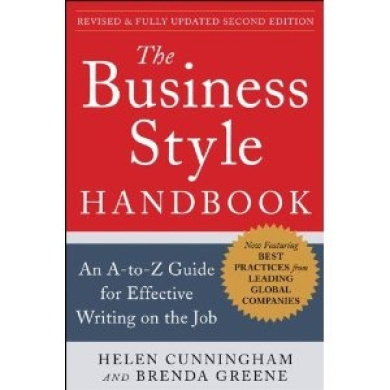
Revised and updated for the newest digital platforms-the classic guide to business writing style and protocols While retaining all the valuable information that has made The Business Style Handbook a modern classic, the second edition provides new words, phrases and guidance to help you express yourself clearly, confidently and correctly on any digital platform. New to this edition: Updated A-to-Z section with 250 new entries Best practices for email in a world of portable devices Insights from communications executives at global companies Praise for The Business Style Handbook “This may be the handiest and clearest book of tips on basic business writing I’ve read in a long time.” -Pam Robinson, cofounder, the American Copy Editors Society “An excellent primer on how to communicate effectively in a business setting.” -Michael Barry, vice president, media relations, Insurance Information Institute “This book is especially helpful for people when English is their second language. I recommend it to all my business classes.” -Elizabeth Xu, Ph.D., author, executive mentor and leadership class instructor, Stanford University “You never want poor writing to get in the way of what you’re saying. . . . This style guide is a valuable resource to help ensure that the quality of your writing differentiates you.” -Bart Mosley, principal and chief investment officer, Alprion Capital Management LP McGraw-Hill authors represent the leading experts in their fields and are dedicated to improving the lives, careers, and interests of readers worldwide Introduction Writing: a core competency How to meet the standard 1. Fortune 500 Survey Results It matters Guidelines, with caveats The content explosion Influence of technology How employees are writing When you need a stylebook Stylebooks used by companies’ professional writers Coping with lag time Strong views on buzzwords Preferred dictionaries How it all adds up 2. Why Style Matters Language is dynamic Writing that gets the job done Take charge Pulling it together 3. The Case for Standards Time for companies to invest in the users Create a standard Win employee buy-in 4. Write WITH Purpose Have a goal Know your audience Write and think at the same time Use the right language Keep it short . . . most of the time Make longer documents user-friendly Get right to the point Take the credit Shift the emphasis Take a stand Think about point of view Keep a tight timeframe Strengthen your professional brand Review everything Make it look good Budget your time 5. Email: Before You Hit Send Write smartphone-friendly emails Choose the right style Be cautious with content When to use email, and when not to Use cc, bcc and Reply to All appropriately Make it easy on your reader Be formal in formal email Be appropriate with greetings Sign off Be smart about email The A-to-Z Entries Sources We Like Notes Bibliography List of Fortune 500 Companies