Description
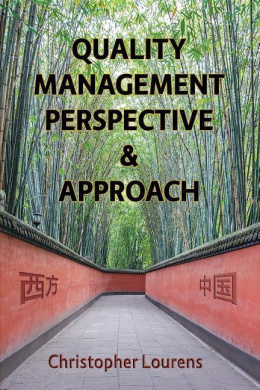
Despite the strong desire to improve, numerous organisations have difficulty realising the full benefits of effective Quality Management and, although practically all prominent organisations in China sport GB/T 19001 (ISO 9001) certification, present implementations generally indicate a non-realization of the full benefits of Quality Management. There is a lot that must be understood and learnt – modern quality management and values supportive of a quality culture need to be understood, practices require to be adapted to suit the business, and tools and techniques need to be learnt. Quality Management Perspective & Approach: Managing and improving quality in China, and elsewhere in the world: Provides an insight into matters affecting Quality Management within Chinese industrial manufacturing organisations Outlines supportive values of a quality management culture Includes observations and narratives of experiences that illustrate various approaches that have been employed to overcome quality deficiencies, improve product quality and enhance quality management Explains successfully established “best practices” of an evolved and improved Quality Management Identifies aspects that make Quality Management an integrated part of an organisation’s overall management system Describes easy-to-apply quality tools and practical techniques, and gives examples of their application Christopher Lourens draws on many years of hands-on experience successfully leading quality management and process improvement initiatives in organisations involved in engineering, manufacturing and installation operations in more than a dozen countries. The depth and breadth of his background enables him to present Quality Management in a manner that is meaningful and practically useful to a wide audience. During the many years of working and living in China, he was exposed to some of the challenges facing business managers in their attempts to get better quality product and to improve Quality Management, and obtained an appreciation of the complexity of the Chinese society and Chinese cultural values and beliefs. Through his book he makes it possible for those who are working or wish to commence working with Chinese companies, or management in China and elsewhere in the world, to employ his unique knowledge and insights to obtain an understanding of developed and improved Quality Management, and to measure current status against best practice so as to identify possible improvement in their own organisation’s processes, and make the necessary adaptations to realise the full benefits of Quality Management.