Description
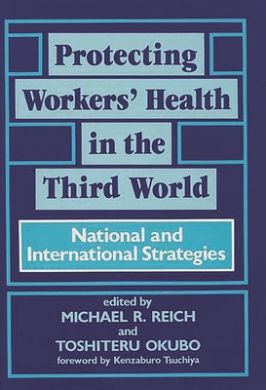
This inquiry into Third World health problems linked to industrialization offers positive directions for both national and international strategies. Occupational health and safety issues, often given low priority as developing countries seek to advance their economies, are seen in their compelling importance through studies on China, Colombia, Costa Rica, India, Malaysia, Nicaragua, South Africa, and Sri Lanka. Part 1 describes the nature and scope of work-related health problems in developing countries. Health policies designed to meet national needs in the changing world and industrial settings are analyzed through case studies in part 2. National strategies are considered in part 3 as means of improving world-related health conditions, and part 4 proposes strategies at the international level to improve Third World occupational health. This is an analysis which may affect the thinking of health policy makers and public health planners in the international community and the Third World.