Description
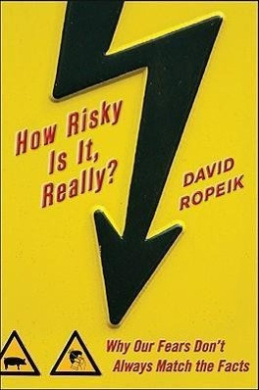
Overcome fears and make better choices by understanding risk More people die of the common flu than they would if they contracted the swine flu. But more people fear swine flu because they think it’s more dangerous. Risk expert David Ropeik explains how we are hardwired to fear first and think second, causing us to misjudge actual dangers. “How Risky Is It, Really?” gives readers a fresh, new perspective for how we should perceive risks in our daily lives in order to make more informed decisions about them. This is a must-read for anyone involved in health and safety as well as anyone who wants to understand why we fear what we do–and whether we should. Introduction Chapter One – This is Your Brain on Fear: The Neuroscience of The Risk Response Amygdala to the Rescue The Fear Response Continues Built-in Fears Chapter Two – Bounded Rationality: Reason Alone Can’t Keep You Safe Reasoning by Instinct The Framing Effect Categorization – The Representativeness Effect Loss Aversion Anchoring and Adjustment The Ready Recall/Awareness Effect Innumeracy Optimism Bias Chapter Three – Fear Factors: Why Some Threats Feel Scarier Than Others Risk Perception Factors Trust Risk versus Benefit Control Choice Natural versus Human-Made Pain and Suffering Uncertainty Catastrophic or Chronic Can It Happen to Me? New or Familiar Risk Risk to Children Personification Chapter Four -The Wisdom, or The Madness, of The Crowds? A Conversation About Climate Change Cultural Cognition Chicken Little, Polyanna, and Other Social Forces And That’s The Way It Is Chapter Five – Closing The Perception Gap The Risk of Getting Risk “Wrong”, As Individuals The Risk of Getting Risk “Wrong”, As a Society Toward Healthy Individual Choices Toward Healthy Choices as A Society Conclusion End Notes