Description
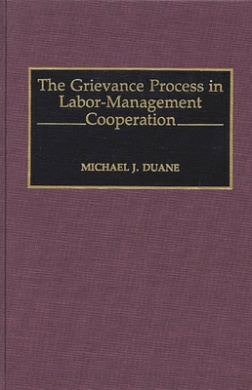
In this book, Duane argues that companies of the 1990s will derive their real competitive advantage from labour-management co-operation. To this end, he notes that labour-management relations, as defined by grievance activity at the shop level, determines to a large degree whether joint ventures between labour and management will be successful. Accordingly, Duane offers a comprehensive discussion of how the grievance process affects labour-management co-operation and firm performance. It also identifies those factors that contribute to effective grievance resolution. Competitive threats have forced unionised firms to consider alternative industrial relations systems, including labour-management co-operation. In the first part of the book, Duane reviews the co-operative options that are available to labour and management. He begins by evaluating the effectiveness of various labour-management programmes and presents practical examples of how to properly implement and maintain them. Co-operative contract negotiation is then offered as a possible labour-management strategy to enhance the competitiveness of the firm. Several suggestions are offered, aimed at ensuring that co-operation at the bargaining table will be successful. Throughout the book, a case is made that the grievance process plays a critical role in promoting labour-management co-operation. Over 40 practical propositions concerning the determinants of forward-looking grievance resolution are identified and thoroughly discussed.